
Master SSC English Vocabulary Without Rote Learning: 30 Power Root Words to Decode 300+ Words and Eliminate Options
You are sitting in the exam hall. Question 14 appears on the screen: “Select the most appropriate SYNONYM of OBSEQUIOUS.” The four options read: A) Defiant, B) Servile, C) Bellicose, D) Candid. If your memory bank depends on rote memorization of 4,000 disconnected word lists, all four options look like foreign Greek. Your mind blanks out, your confidence wobbles, and you toss a coin on negative marks. Here is how to decode the genetic code of English words using etymological root science.
1. The “Rote Memorization” Trap in SSC Vocabulary
Every year, hundreds of thousands of aspirants buy massive 500-page vocabulary books or download bulky PDFs containing 5,000 alphabetical word lists. They sit down with a highlighter, cramming 50 words starting with ‘A’ on Monday, 50 words starting with ‘B’ on Tuesday, and by Friday, they discover that 80% of what they crammed has evaporated into thin air.
This is not a flaw in your intelligence; it is basic neuroscience explained by the Ebbinghaus Forgetting Curve. When you force your brain to store arbitrary phonetic strings without contextual meaning or architectural anchors, your hippocampus tags them as cognitive noise and purges them within 72 hours.
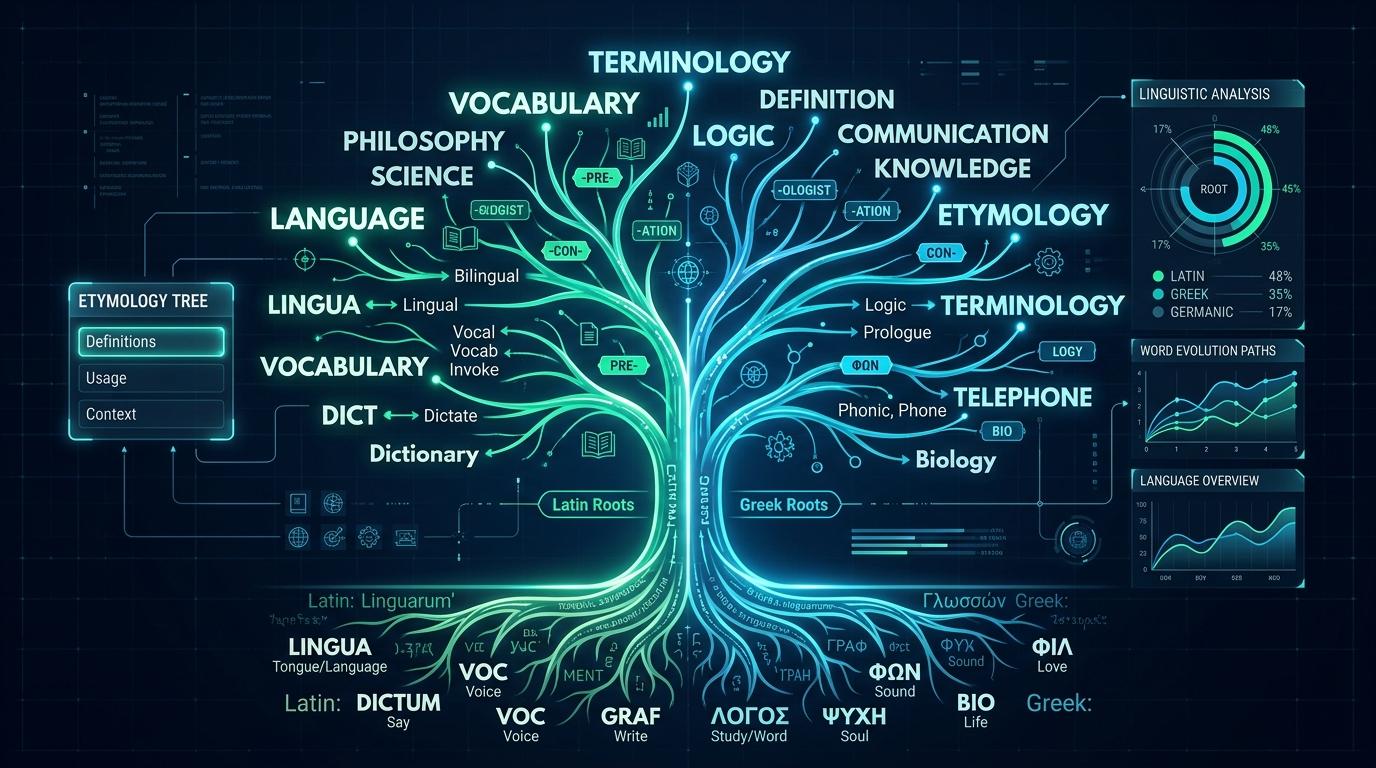
The Etymological Reality of the English Language
English is not a haphazard collection of 100,000 isolated words. Over 60% of modern English vocabulary—and more than 85% of advanced competitive exam words tested by TCS in SSC CGL, CHSL, and CPO—derives from classical Latin and Ancient Greek roots.
When you learn words as isolated entries, 30 words equal 30 individual memory burdens. But when you learn 1 root word, you automatically unlock the structural blueprint of 10 to 15 related words. Mastering 30 roots expands your active recognition vocabulary to over 300 words without a single flashcard.
Table 1: The Word Anatomy Formula Matrix
Every complex competitive English word is built from three algebraic variables:Prefix (Direction / Tone) + Root (Core Meaning) + Suffix (Part of Speech)
| Word Component | Linguistic Function | Real Exam Example | Meaning Deconstruction |
|---|---|---|---|
| Prefix | Sets orientation, relationship, or emotional tone (+ / − / neutral) | MAL-evolent | MAL- (Bad / evil) + VOL- (Wish) + -ENT (Adjective) = Wishing evil upon others. |
| Root Stem | Carries the unshakeable semantic DNA and core concept | Bene-FACT-or | BENE- (Good) + FACT- (Do / make) + -OR (Person) = One who does good deeds for others. |
| Suffix | Determines the grammatical category (Noun, Verb, Adjective, Adverb) | In-CORRIG-ible | IN- (Not) + CORRIG- (Correct / straighten) + -IBLE (Capable of) = Incapable of being reformed. |
| Composite Compound | Multi-root synthesis frequently tested in One-Word Substitutions | PHIL-anthrop-ist | PHIL- (Love) + ANTHROP- (Human) + -IST (Practitioner) = A lover of humankind; charitable donor. |
2. The “Tone Filter” Technique: Eliminate Options Without Knowing the Exact Word
When examiners design vocabulary questions for SSC CGL, they rely on candidate panic. They place four complex options knowing that most students will focus on minor nuances. Top rankers use a much faster, sharper method: The Tone Polarity Filter.
Every Latin and Greek root carries an inherent Emotional Charge: Positive (+), Negative (−), or Neutral (0). When you read an unfamiliar word, you do not need to produce its dictionary paragraph definition. You only need to extract its emotional polarity from its prefix or root stem.
Case Study: Deciding a Synonym in 8 Seconds
Consider the question: “Select the synonym of BELLICOSE.”
- Options: A) Peaceful, B) Pugnacious, C) Amicable, D) Benevolent.
- Root Recognition: You spot the root
BELL-(War / Fight). Charge = Strongly Negative (−). - Option Screening:
- Option A: Peaceful → Positive (+) → Eliminated.
- Option C: Amicable → Root AMI- (Friendship / Love, +) → Eliminated.
- Option D: Benevolent → Prefix BENE- (Good / Kind, +) → Eliminated.
- Option B: Pugnacious → Root PUGN- (Fist / Fight, −) → Direct Match!
Notice: You eliminated three options and locked in Option B without ever having to remember a memorized dictionary sentence for ‘Pugnacious’!
Table 2: The “Tone Filter” Elimination Grid for Cloze Tests
| Sentence Tone | Required Prefix Signals | Instantly Disqualified Options | Real Exam Cloze Sentence |
|---|---|---|---|
| Positive (+) Tone | BENE-, EU-, PRO-, AMBI- (harmonious), PHIL- | MAL-, CAC-, DIS-, MIS-, IN- (negative) | “The founder's [...] contributions helped establish hospitals for underprivileged children.” → Requires Benevolent / Munificent, eliminates Malevolent / Pernicious. |
| Negative (−) Tone | MAL-, DYS-, CACO-, BELL-, PUGN-, CULP- | BENE-, EU-, AMIC-, BON- | “His [...] behavior in the assembly incited a violent clash between rival political cadres.” → Requires Belligerent / Factious, eliminates Placatory / Conciliatory. |
| Neutral / Technical (0) | CHRON-, SPEC-, COGN-, GEN-, ANTHROP-, LOG- | Overly judgmental moral qualifiers | “Geologists analyzed the rock strata in strict [...] sequence to date the tectonic fault lines.” → Requires Chronological, eliminates Anachronistic / Erratic. |
3. The Master 30 Power Root Words Matrix (The 300+ Word Engine)
Below are the 30 foundational roots that generate over 75% of all vocabulary questions across SSC CGL, CHSL, CPO, and Stenographer shifts. Study them organized by conceptual family:
Table 3: The Master 30 Power Root Words Matrix
| Root Stem | Core Meaning | Charge | 5 High-Yield SSC Exam Words | Exam Context Sentence |
|---|---|---|---|---|
| Group A • Character, Morals & Intent | ||||
| 1. BENE / BON | Good, Well | (+) | Benefactor, Benevolent, Benign, Benediction, Bonus | The doctor assured that the tumor was benign and harmless. |
| 2. MAL / MALE | Bad, Evil, Ill | (−) | Malevolent, Malicious, Malignant, Maladroit, Malediction | His maladroit handling of the diplomatic crisis outraged delegates. |
| 3. VOL / VOLI | Wish, Will, Desire | (0) | Volition, Benevolent, Malevolent, Involuntary, Volunteer | He resigned from the committee of his own free volition. |
| 4. PLAC / PLAIS | To Please, Pacify, Calm | (+) | Placate, Placable, Placid, Complacent, Implacable | An implacable enemy refuses all ceasefire negotiations. |
| 5. AMBI / AMPHI | Both, Around, Two-sided | (0) | Ambiguous, Ambivalent, Ambidextrous, Amphibian, Ambience | His ambiguous response left investigators guessing his real motives. |
| Group B • Power, Speech, Authority & Truth | ||||
| 6. DICT / DIC | To Say, Speak, Proclaim | (0) | Verdict, Dictator, Contradict, Vindictive, Malediction | The witness gave testimony that contradicted the defendant's alibi. |
| 7. LOQU / LOC | Talk, Speak, Discourse | (0) | Loquacious, Eloquent, Soliloquy, Circumlocution, Grandiloquent | Avoid circumlocution; come straight to the point in descriptive writing. |
| 8. VER / VERI | Truth, Real, Authentic | (+) | Veracity, Veritable, Verify, Verisimilitude, Aver | The defense counsel questioned the veracity of the informant. |
| 9. OMNI | All, Universal | (0) | Omnipotent, Omniscient, Omnipresent, Omnivorous, Omnibus | An omniscient narrator sees the internal thoughts of every character. |
| 10. POTEN / POSS | Power, Ability, Strength | (0) | Potent, Impotent, Potential, Potentate, Plenipotentiary | The antibiotic proved highly potent against the viral infection. |
| Group C • Time, Order, Emotion & Existence | ||||
| 11. CHRON | Time | (0) | Chronology, Anachronism, Synchronize, Chronic, Chronicle | A wrist-watch in a film set in ancient Rome is a blatant anachronism. |
| 12. PATH / PATHY | Feeling, Emotion, Suffering | (0) | Sympathy, Empathy, Apathy, Antipathy, Pathological | Widespread voter apathy led to a record-low election turnout. |
| 13. ANIM | Mind, Soul, Spirit, Life | (0) | Animosity, Magnanimous, Equanimity, Unanimous, Pusillanimous | The victorious general showed magnanimous treatment to prisoners. |
| 14. MORT / MORI | Death, Dying | (−) | Mortal, Immortal, Morbid, Moribund, Mortify | The revival package aimed to breathe life into the moribund textile firm. |
| 15. GEN / GENI | Origin, Birth, Race, Type | (0) | Genesis, Congenial, Indigenous, Ingenuous, Progeny | The team operated in a remarkably congenial working atmosphere. |
| Group D • Senses, Sight, Mind & Clarity | ||||
| 16. SPEC / SPIC | To Look, See, Observe | (0) | Spectator, Conspicuous, Retrospective, Circumspect, Perspicacious | A circumspect officer never commits rashly to unverified accusations. |
| 17. COGN / GNO | To Know, Recognize | (0) | Cognizant, Recognize, Incognito, Prognosis, Diagnosis | The tribunal remained fully cognizant of statutory human rights provisions. |
| 18. LUC / LUM | Light, Clear, Bright | (+) | Lucid, Pellucid, Elucidate, Luminary, Luminous | The professor gave a lucid explanation of complex quantum mechanics. |
| 19. SENS / SENT | Feel, Perceive, Think | (0) | Sentient, Dissent, Consensus, Resentment, Presentiment | Two dissenting judges registered strong written disagreement with the verdict. |
| 20. PSYCH | Mind, Mental State, Soul | (0) | Psyche, Psychology, Psychosis, Psychosomatic, Psychopath | Extreme stress often produces debilitating psychosomatic headaches. |
| Group E • Social, Affinity, Fear & Conflict | ||||
| 21. PHIL / PHILE | Love, Affinity, Fondness | (+) | Bibliophile, Philanthropist, Philosophy, Philology, Philanderer | As a committed bibliophile, she spent weekends cataloging rare manuscripts. |
| 22. PHOB / PHOBIA | Fear, Dread, Aversion | (−) | Claustrophobia, Xenophobia, Acrophobia, Agoraphobia, Hydrophobia | Xenophobia damages international trade relations and cross-border research. |
| 23. ANTHROP | Human, Mankind | (0) | Anthropology, Philanthropy, Misanthrope, Anthropomorphic, Anthropocentric | The bitter hermit turned into a cynical misanthrope who avoided society. |
| 24. GREG | Flock, Herd, Group | (0) | Gregarious, Segregate, Aggregate, Congregate, Egregious | An egregious accounting error caused the regulatory audit penalty. |
| 25. BELL / BELLI | War, Fight, Hostility | (−) | Belligerent, Bellicose, Rebel, Postbellum, Antebellum | The spokesperson dismissed the rival nation's belligerent threats. |
| Group F • Movement, Intake, Change & Fault | ||||
| 26. TRACT | Draw, Pull, Drag | (0) | Attract, Retract, Protracted, Intractable, Abstract | Protracted labor disputes crippled production for seven consecutive months. |
| 27. GRESS / GRAD | Step, Walk, Move | (0) | Progress, Regress, Digress, Transgress, Egress | The speaker frequently digressed from the core theme of tax reform. |
| 28. VOR / VOUR | Eat, Devour, Consume | (0) | Voracious, Carnivorous, Herbivorous, Omnivorous, Devour | A voracious reader absorbs dozens of books on history every quarter. |
| 29. NOV | New, Fresh, Recent | (+) | Novel, Novice, Innovate, Renovate, Renovation | The startup introduced a novel algorithmic architecture for cloud security. |
| 30. CULP | Blame, Guilt, Fault | (−) | Culprit, Culpable, Exculpate, Inculpate, Mea culpa | DNA evidence was presented to exculpate the wrongfully accused citizen. |
4. The 10 Most Deceptive Root Traps in TCS SSC Exams
TCS examiners frequently select pairs of words that share common phonetics or related root origins but have sharply divergent secondary meanings. Aspirants who rely on surface-level sound recognition fall directly into these traps:
Table 4: Top 10 Deceptive Root Confusions & Homophones in TCS SSC Exams
| Confused Pair | Root Origins | What The Examiner Tests | Instant Memory Hook |
|---|---|---|---|
| 1. Sensuous vs. Sensual | Both from SENS- (Feel / Perceive) | Sensuous: Aesthetic artistic pleasure (music, poetry). Sensual: Physical, carnal, or bodily gratification. | Sensuous = Art / Poetry (Poetic). Sensual = Physical desires. |
| 2. Compliment vs. Complement | PLI- (Fold) vs. PLET- (Fill / Complete) | Compliment: Praise, flattery, or admiration. Complement: That which completes or enhances a pair. | Compliment = “I like you” (Praise). Complement = Complete. |
| 3. Ingenious vs. Ingenuous | Both from GEN- (Inborn / Origin) | Ingenious: Clever, inventive, brilliant. Ingenuous: Innocent, naive, candid, child-like. | Ingenious = Genius. Ingenuous = “Unsuspecting” (Naive). |
| 4. Beneficent vs. Beneficial | BENE- + FIC- (Do) vs. FAC- (Make) | Beneficent: Doing active acts of kindness (Person). Beneficial: Producing helpful results (Situation / Thing). | Beneficent = Acts of a person. Beneficial = Fruits / Diet. |
| 5. Continuous vs. Continual | TEN- (Hold / Stretch) | Continuous: Uninterrupted without a single break. Continual: Repeated frequently with breaks/intervals. | Continuous = Unbroken stream. Continual = Recurring rings. |
| 6. Credible vs. Credulous | CRED- (Believe / Trust) | Credible: Believable, trustworthy (Statement). Credulous: Gullible, easily deceived (Person). | Credible = Verifiable. Credulous = Gullible fool. |
| 7. Disinterested vs. Uninterested | DIS- (Apart) vs. UN- (Not) | Disinterested: Impartial, unbiased, objective (Judge). Uninterested: Bored, uncaring, lacking interest. | Disinterested judge = Fair justice. Uninterested student = Sleeping in class. |
| 8. Historic vs. Historical | HISTOR- (Record of past) | Historic: Monumental, epoch-making, famous in history. Historical: Pertaining to the past or records of history. | Historic speech = Famous event. Historical novel = Set in past era. |
| 9. Eminent vs. Imminent | E- + MIN- (Stand out) vs. IN- + MIN- (Hang over) | Eminent: Distinguished, respected, celebrated. Imminent: About to happen very soon, impending. | Eminent = Esteemed scholar. Imminent = Incoming storm. |
| 10. Elicit vs. Illicit | EX- + LACERE (Draw out) vs. IN- + LICERE (Not lawful) | Elicit: To evoke or draw forth a response/reaction. Illicit: Illegal, forbidden by law or social norms. | Elicit = Evoke a reply. Illicit = Illegal drugs. |
Verify how frequently these exact confusions appear in our shift-wise SSC previous year question papers while pairing your verbal study with our core quantitative shortcut formulas.
5. Three Real SSC CGL PYQ Questions Solved via Root Decoding
Authentic TCS Shift Prompt:
“Select the most appropriate SYNONYM of MALADROIT.”
Linguistic Deconstruction: The word contains prefix MAL- (Bad, Awkward) + French root DROIT (Right hand / Skillful). Hence, Maladroit literally means “lacking skill / awkward with hands”.
10-Second Elimination: Dexterous (+ Skillful with hands), Astute (+ Sharp mind), and Agile (+ Quick footed) are all highly positive traits (+). Only Clumsy (−) matches the negative polarity. Option B is locked within 5 seconds.
Authentic TCS Shift Prompt:
“Select the most appropriate ANTONYM of MAGNANIMOUS.”
Linguistic Deconstruction: Root MAGN- (Great / Large) + ANIM- (Soul / Spirit) = Great-souled, noble, generous.
10-Second Elimination: The opposite of “great-souled” is “tiny-souled / petty / cowardly”. Root PUSILL- (Tiny / Weak) + ANIM- (Soul) gives Pusillanimous (Option C). Altruistic, Munificent, and Chivalrous are all noble positive synonyms.
Authentic TCS Shift Prompt:
“The finance minister's speech was remarkably [...], presenting the complex fiscal deficit numbers with such structural simplicity that even elementary students grasped the thesis.”
Contextual Polarity: The second half of the sentence states “such structural simplicity that even elementary students grasped the thesis”. This dictates an undeniable positive clarity requirement.
Root Filter: Root LUC- (Light / Clear) gives Lucid (Option B). Ambiguous (Doubtful), Tenebrous (Dark / obscure), and Convoluted (Twisted / complex) are all semantic opposites.
6. The 15-Minute Daily Vocab Retention Protocol
Consistency beats cramming. You do not need two hours of daily vocabulary grind. Dedicate exactly 15 structured minutes every morning over a 30-day window:
Targeted Root Absorption
Pick exactly two root families from our master matrix (e.g., Loqu and Plac). Read their core meanings, emotional charges, and note the physical sound-association.
Genetic Word Mapping
Draw a small tree on your blank sheet. Write the root in the trunk. Draw five branches attaching prefixes (In-, E-, Circum-, Bene-, Grandi-). Write one sentence using each word.
Live Polar Elimination
Solve five PYQ questions using only the tone filter and root elimination technique. Never check the answer key until you have actively disqualified at least two options by their roots.
Test your newly built verbal agility under live countdown conditions on full-length bilingual SSC mock tests and download supplementary worksheets from our downloadable vocabulary and grammar notes. Keep track of all notification deadlines on the official SSC examination notices.
Why Perfect Rank is Best for SSC Verbal Ability and English Preparation?
Transforming English from an uncertain guessing lottery into a guaranteed 45+ scoring section requires testing on authentic examination infrastructure:
Practice on the genuine TCS computer-based test layout with accurate countdown clocks, color-coded question palettes, and instant bilingual question switching.
Attempt full-length mocks, sectional English drills, and vocabulary quizzes immediately without compulsory phone logins, OTP delays, or paywalls.
Every solution pairs grammar rules with comprehensive Latin and Greek root breakdowns, showing you exactly how wrong options could have been eliminated in under 10 seconds.
Official previous year question papers from recent shifts solved with semantic polarity rules, tone filters, and contextual Cloze Test elimination techniques.
Join Our Telegram Channel for Daily Root Words & Shift Quizzes!
Receive daily root-word flash infographics, shift-wise vocabulary analyses, downloadable PDF worksheets, and live exam notification alerts directly on your smartphone.
Related Articles & Strategic Masterclasses
View All Guides
The 60-Minute Exam Matrix: How Toppers Attempt 100 Questions in SSC CGL Tier-1
Master the 3-Round Attempt Strategy and 45-second abandonment rule to view all 100 questions.
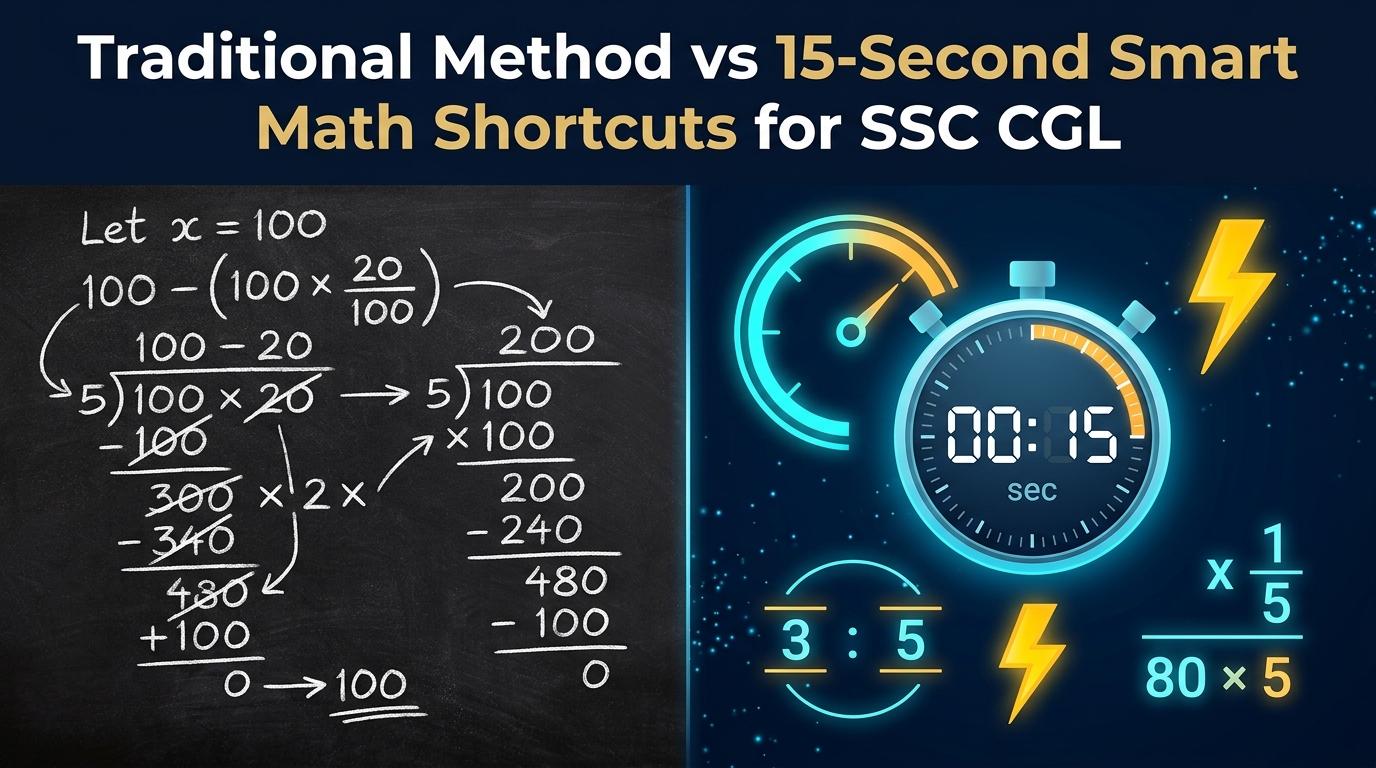
Traditional Method vs 15-Sec Smart Shortcut: Side-by-Side Comparison for 7 Toughest Problems
Stop wasting 2 minutes on arithmetic. Compare school algebra side-by-side with ratio shortcuts.
10 Deadliest TCS Trap Questions in SSC Math & Reasoning (And How to Defeat Them)
Discover how examiners engineer deceptive options and how toppers bypass them in 10 seconds.
Frequently Asked Questions (FAQ)
Q1.Can root words help solve Reading Comprehension passages faster?
Yes. When reading dense philosophical, scientific, or socio-economic passages in Tier-2, encountering unfamiliar jargon usually forces candidates to re-read sentences two or three times, wasting 40 to 50 seconds. Recognizing root stems (like anthropo-, morph-, or chron-) allows you to grasp the contextual tone and conceptual domain instantly, eliminating the cognitive friction of unknown terms and keeping your reading speed at a brisk 200 words per minute.
Q2.What should I do if a word does not seem to have an obvious Latin or Greek root?
Approximately 30% of high-frequency English vocabulary stems from Germanic, Anglo-Saxon, or Old Norse roots (e.g., words like withstand, uncanny, or ruthless). For these non-classical words, rely on compound breakdowns, grammatical part-of-speech context, and our secondary 'Tone Polarity Filter' (checking whether the surrounding sentence demands a favorable, critical, or neutral descriptor) to eliminate illogical options.
Q3.How many vocabulary questions are typically asked in SSC CGL Tier-1 vs Tier-2?
In SSC CGL Tier-1, direct vocabulary questions (Synonyms, Antonyms, One Word Substitution, and Idioms/Phrases) account for 10 to 12 questions out of 25—amounting to 20 to 24 marks directly. In Tier-2, vocabulary and vocabulary-dependent Cloze Tests constitute nearly 40% of the entire 135-mark English section. A weak vocabulary base caps your English score at 95; a root-word foundation elevates it past 125.
Q4.Is reading an English newspaper necessary if I already study root words?
Studying root words provides the foundational skeleton, while reading high-quality editorial prose (such as The Hindu or The Indian Express) supplies the living muscle tissue. Root words tell you that 'loquacious' means talkative, but active reading shows you how TCS frames 'loquacious orator' in cloze tests versus 'reticent listener'. Spend 15 minutes on root families and 20 minutes reading editorial columns daily for optimal retention.
Written by madhu | Head of Verbal Ability & Founder, Perfect Rank
Committed to transforming language learning from stressful memorization into an intuitive, high-scoring science.
Stop fighting the English dictionary with brute memorization; decode its DNA through root words. When you recognize that language is a structured architecture rather than a random list of words, options in Synonyms, Antonyms, and Cloze Tests eliminate themselves. Invest 15 structured minutes daily in root families, enforce the tone filter, and claim your rightful 45+ marks in SSC English.